

You feel it every single day. When something goes wrong in a meeting, over email, or during a performance review, the rush to blame yourself can feel inevitable. Sometimes it seems like your managers and coworkers are pushing you to take too much accountability. Other times you’re not sure if it really is a problem with you. Even when you know that blaming yourself for everything can’t be the full story, life still seems to stack in a way that makes it easy to believe the problem must be you.
We all get the urge to blame ourselves from time to time. For many of us, it becomes a familiar crutch. When issues arise at work, the real cause is usually nuanced. Serious problems almost always involve more than one person’s mistake. If we shouldn’t take the feeling of being at fault for everything literally, why do so many of us feel it so strongly each day? There has to be a reason why so many intelligent people have an overactive habit of blaming themselves at work.
Oddly enough, when you blame yourself for everything, you’re tapping into a very ancient survival mechanism. This system worked well in our distant past, but it isn’t wired cleanly for modern human life. If you’ve been wondering why do I blame myself for everything when things get tense, you’re in the right place. We’re going to look at how this pattern has changed over time so you can put less weight on treating the feeling as literally true today.
The Old Game of Self-Blame
If you’ve ever spent time bird watching, you’ve probably noticed how incredibly fast birds respond to the world around them. Whether a bird is chirping in rhythm with others, building its nest with precision, or reacting to a predator, it stays in almost constant contact with its environment. The ability to respond effortlessly to feedback around it serves a number of purposes:
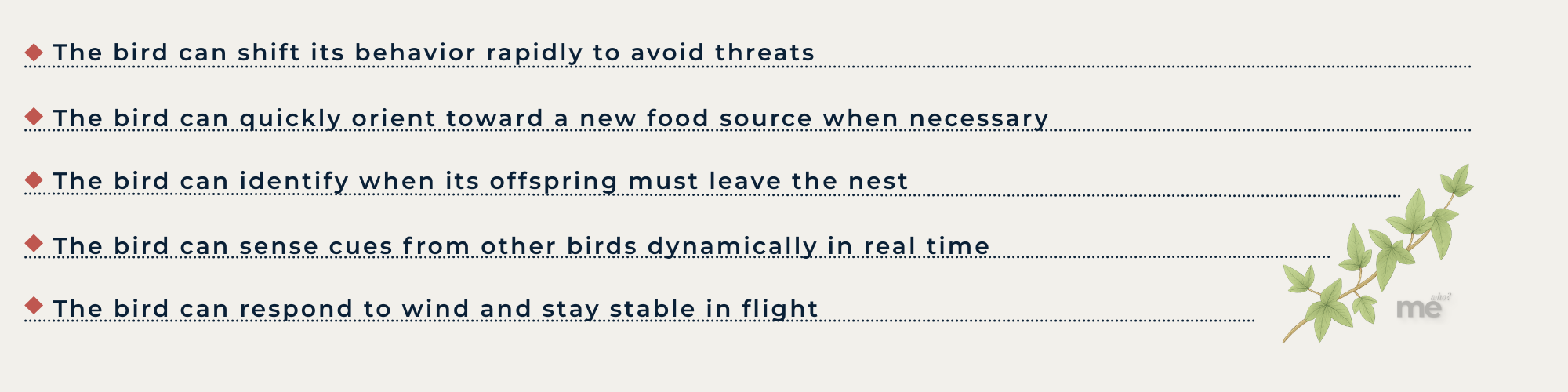
Animal nervous systems react to split-second feedback, catching tiny shifts in pressure, light, or sound. From earthquakes to solar eclipses, the attunement animals have with their environment looks almost magical to us. We tend to see their behavior as predictive, long after the event is already well underway for them.
Over millions of years, animal nervous systems evolved to stay in constant sync with these environmental signals. Weather, water, predators, and other survival threats were always in motion. Animals that fell out of sync with the cues around them couldn’t adapt, survive, and pass along their genes. The stakes were real and immediate. If you didn’t respond in real time, you were done.

The Human Problem
Early humans responded to environmental cues much like animals do today. Tribes and nomadic groups stayed in sync with the land and with each other to stay alive against insurmountable dangers. In that world, social rejection could literally end your life. If your behavior threatened the cohesion of the tribe, you put everyone’s survival at risk. If you were cast out, you almost certainly wouldn’t survive the harsh conditions on your own. Tribal cohesion was the single most important driving force behind survival, and the tribe’s attention stayed fixed on the environment as a whole. Early survival was intense, but humans remained in constant feedback with each other and the world around them.
Over time, humans became further removed from the natural world and began to exist in a new kind of environment—one expressed through abstract thought. In this environment, shared reality shifted from direct cues to symbols:
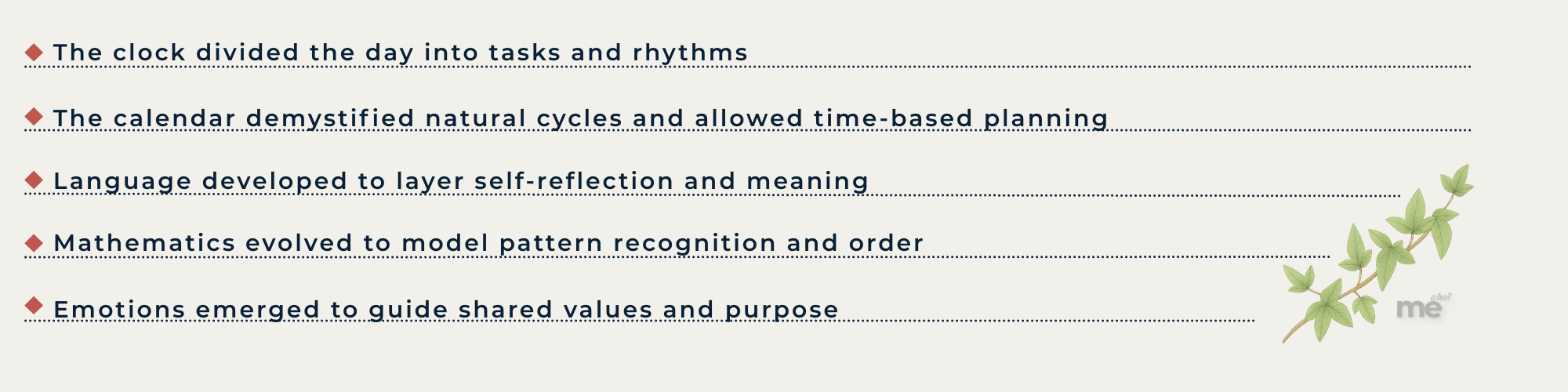
In the modern human world, reality is built far more from “symbols about the world” than from the raw facts of the world itself. When you ruminate about an exam you might have failed, or spend hours wondering whether your boss is still upset with you, you’re responding to internal symbols and using them in place of real-time data. It might take days for your manager to reply, or for a new romantic interest to text back. Neither delay tells you much about what’s actually happening. In the absence of real feedback, your mind is left to build stories from whatever scraps of information it can find, and usually the evidence is thin.
Even though humans look highly evolved and advanced, we still depend on mirroring the environment, just like animals, to make sense of our place in the world. While the bird reacts the moment it senses danger, you can wait three days for your performance review, unsure whether there’s any real threat at all. You still feel the same demand the bird feels: respond as soon as you detect a threat. In your world, that signal is abstracted enough that it often isn’t clear whether there’s a real threat or whether your mind is inventing one. Sometimes there is a real problem, but it requires a careful response, where instinct would have you blowing up in a meeting instead. Modern situations ask you to take an age-old signal and filter it through a layered, symbol-rich environment where your mind may never get the clean feedback it evolved to rely on to feel stable and safe.
Early Reflections
A human baby is first born with none of these higher-level abstraction abilities. In that frantic, chaotic soup of environmental data, the baby scrambles to recognize repeating patterns in the world around them. Early mirroring from a parent or caregiver is crucial in this stage. Those repeating moments of contact are what let the child find the first hints of order in all that early chaos. In that early image, the child is looking at the parent, but they’re actually forming the first threads of stable identity—discerning repeating order from the noise of the world. Initially, just like the animals, we form our identities by looking for feedback in the outside world. The more stable and secure these early identity anchors are, the more a child can learn to turn inward and trust that their perceptions about reality are grounded and reflect truth.

When a child grows up without proper mirroring from their parents or environment, that mirror can reflect back chaos, disorder, or fear. Even those of us with excellent parents may not have gotten the reflection we needed at critical points in our lives. When a child doesn’t develop a stable mirror as an infant, they begin to see the world with gaps in their sense of identity—projections of the chaos they internalized as “themselves” early on. The child learns to identify with that sense of disorder and carry it forward. This is why so many of us feel the familiar seed of self-blame. We’ve all felt the temptation to define the chaos as ourselves, because at some point, we had no better story for it. As we age, that seed grows into a story of “who we are.”
In many homes, this “story of chaos” is passed down generationally. Because it doesn’t feel like it belongs inside a stable identity, it stays outside the model and has to live “out there” instead of “in here.” When that unresolved chaos gets pushed onto the people around us, children learn to pull that chaos inside and identify with it:
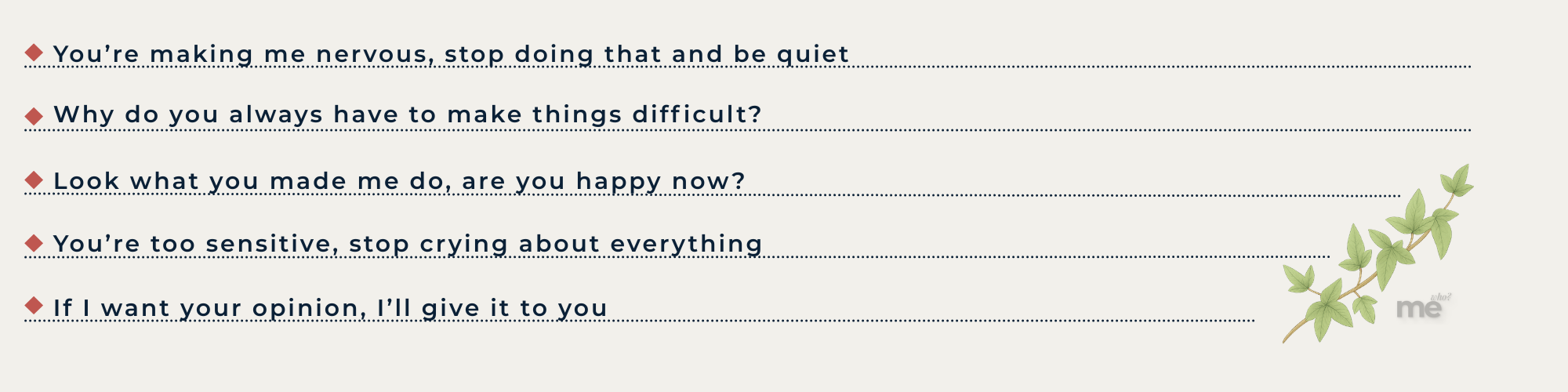
In this way, we pass down unintegrated feedback from childhood, but we wrap it in a story that makes it feel completely real. Years of being blamed for the projected emotions of others lead many children to believe they are the cause of everything that goes wrong around them. Later, when they have children of their own and project those same feelings, the cycle repeats. It’s one way we make sense of a very long continuity that has been unfolding for many thousands of years.
Trained to Take the Blame
Let’s look at three ways your sense of self can form around self-blame once the seed is planted in childhood. You might see yourself heavily in one of these early mirrors, or notice pieces of each. These same early identities tend to show up again in your work life.
Always-On Achiever
Feeling waves of self-blame doesn’t automatically mean you had a traumatic childhood. Many people grow up in loving, supportive families and still end up with a reflex to blame themselves. In a lot of homes, praise is the unspoken currency of love. You saw the adults around you stressed, busy, and overwhelmed, and a part of you rushed to make sense of it by assuming you caused it and could fix it.
You might have done this by:
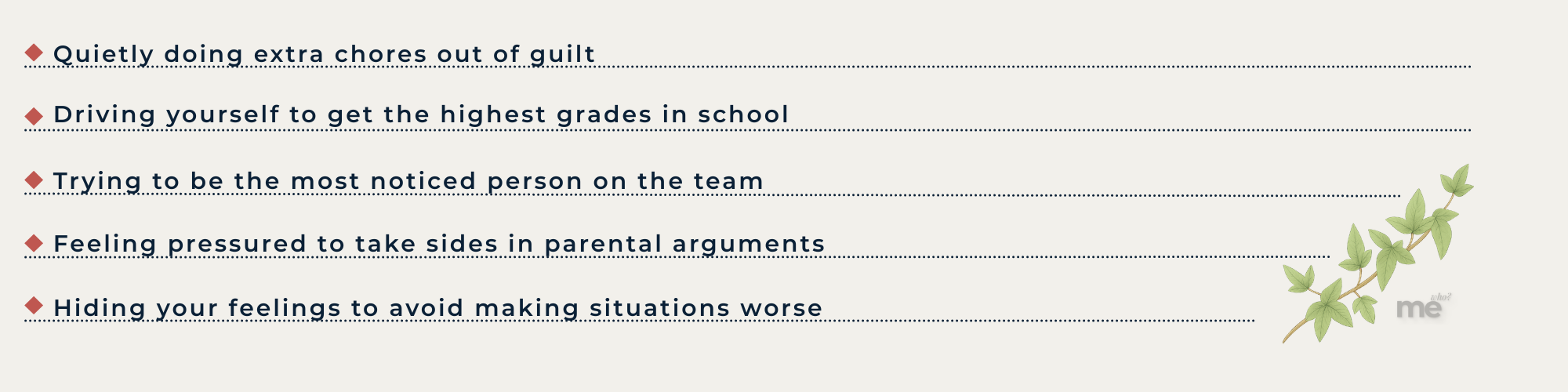
You’ve probably lived through these kinds of situations and emotions in childhood. They felt ordinary at the time, just part of what it meant to grow up. When you look back and notice how often those moments were driven by guilt, you see how many times self-blame had a chance to shape your story. Now, at work, the same pattern still shows up. You replay what you said after a meeting, read silence during a presentation as rejection, or spend hours fixing work no one asked you to touch. The very same reflex that started in childhood is still running on autopilot today.
Background Radiation
Sometimes you grow up with very little mirroring at all. Maybe your parents were physically or emotionally absent. Maybe emotions were never discussed, so staying out of the way felt like the safest move. Over time, it can start to feel like there is no stable place in the world where your feelings can land and be reflected back as real. In many homes, children are only noticed when something is wrong, when they act out, make noise, or cause a disruption. Being seen becomes tied to a fearful response. Slipping out behind the scenes starts to feel like the only safe option. You can grow up surrounded by family and still feel deeply alone. When you’re left alone with no external mirror to help make sense of your feelings, it can feel like the whole world is saying one thing: being seen is dangerous. You learn to keep your feelings hidden to keep that fear response away. It starts to seem like hiding your real feelings is the only way to get by.
These days, you still feel that same fearful response whenever you’re in situations where this survival strategy once kept you safe. From exploding at partners for asking an intimate question to feeling a wave of anxiety that’s out of proportion when someone asks for your opinion in a work meeting, everything feels charged. Whether the explosion is outward at others or you painfully quake inside, the basic problem is the same: every time you show up to be seen, panic rises instead. These responses don’t have to be extreme to be real. Even snapping at a coworker who came off a little critical has roots in childhood moments where no sensible mirror was available.

Chaos Coordinator
You might have grown up in environments where the mirror was constantly changing. The house might have been loud, unpredictable, and tense: filled with rage, volatility, depression, or substance use. In families like these, instability is the norm, and hypervigilance becomes a basic survival skill. You learn to read every face in the room to predict and preempt explosions, avoid certain people to stay off their “bad side,” or mentally rehearse all the ways things could go wrong so you could stay ahead of them. When the world reflects such chaotic unpredictability, calm itself can seem like the threat—one delicate moment before the storm returns.
Now that you’re older, “calm” rarely stands on its own. Silence often feels like rejection. Even praise can feel suspect, like you’re only moments away from discovering there was some hidden problem all along. Peaceful moments feel like holding a life raft in a stormy sea, a brief moment on borrowed time. You preemptively change your behavior in response to micro cues from others, or drop into assuming you must be the cause whenever someone is upset. You might rush to correct problems before you even know whether they’re yours to solve or if your involvement would truly help. That urgency can lead to behaviors that don’t match what other people are actually feeling, even though the fear in your body feels completely justified. You keep hoping one day the calm will finally stay, but just as quickly as it appears, it disappears again, cycling you back into a sense of endless delay.
No More Buying the Blame
No matter what kind of family you came from, there were almost certainly moments when you didn’t get the mirroring you needed. Confusion got internalized; false conclusions were drawn. In the space of those misunderstandings, real behavior patterns formed that still follow you into work today. Whether you look at it through the ancient lens or your own history, one thing is clear: “blaming myself for everything” does not serve you well today.

Once you can see the pattern more clearly, it’s easy to turn back and blame parents, friends, old relationships—even the whole arc of human history—for this feeling. You might see it as a trick of fate: something you couldn’t control, proof that you were a victim of forces “beyond your control,” or just an unfair world. If it isn’t your fault, it has to be someone else’s, right? That’s the trap that keeps the story going one more time. We’ve all been dealt a bad hand at times. When we stop using blame to write the story, it becomes much easier to see a way out.
How This Plays Out at Work
It starts by noticing when you feel the urge to overcorrect. Maybe you’re in a meeting, the room goes quiet, and it suddenly feels like you should say something. Maybe it’s just a small shift in someone’s tone. You feel yourself rising to explain, correct, take responsibility, or take the blame.
Before long, you’re explaining, apologizing, or scrambling to fix something. It starts to feel like your full-time job is blaming yourself when everything goes wrong and rushing in to absorb every problem so no one else has to. It might be subtle, but halfway through you start to feel unsure whether you should be responding this way at all. You don’t get the reaction you expected from coworkers, you suspect you misread the situation, or you start doubting whether you were seeing things clearly. After all of this, it feels like you were right to doubt yourself: you shouldn’t have spoken up. If it wasn’t your fault before, it is now. The next time you hit a similar trigger, you drop down the same rabbit hole and wonder: why do I keep blaming myself for everything?

When you’re in the middle of this, it feels perfectly logical, but that doesn’t make it literally true. It just feels true. In those moments, you don’t have the luxury of walking back through ancient history or childhood memories. Your attention is locked on what’s happening at work, and when the pressure spikes you need something simple you can reach for in the moment.
The next time you feel the urge to overcorrect, ruminate, or take blame that isn’t yours, try labeling the feeling: “survival pattern”. Then respond by waiting instead of acting. You’ll recognize the moment: everything rushes at you at once and you scramble to give it a convenient story. If you can meet that moment with “ah, survival pattern,” you can stop believing it just long enough for it to pass. Simply seeing it as an unnecessary reaction is enough to give your mind time to catch up to reality.
Most of the time, we act on these moments too quickly to notice that they are old survival stories trying to run again. Holding just enough awareness to say “don’t trust this right now: wait” is often all you need to let your mind settle and reach a more grounded place to draw conclusions from. Half the time, the next small expression you see from your colleague will confirm that you’d jumped to conclusions. The other half of the time, whatever you notice feels less urgent to respond to immediately, and you can let other people’s discomfort stay with them instead of taking it on as yours. It’s as easy as remembering to see it, say it, shift it, whenever the feeling becomes overwhelming.

The Five-Alarm Fire Drill
It can feel almost insulting to think that the solution to your most pressing emotional problems at work could amount to “do nothing.” Consciously choosing not to react when your system is demanding a response is harder than it sounds. The goal isn’t to avoid responding to stress, it’s that your best response usually arrives a few moments after the immediate threat signal your body fires when it first starts working on the problem.
This highly charged, activated state can’t sustain itself in your mind unless you keep feeding it with stories and reactions. Even if you discover that the anxiety is connected to a real problem you need to resolve, that awareness will survive the fight-or-flight moment and you can act on it once you’ve calmed down. You simply ignore the urgency, not the clarity you gain as it passes.
Practicing this move can make you less impulsive and less reactive, while making you more responsive to the things you can change—without needing to blame yourself to keep the old story going.
Letting Reality Finish the Sentence
The modern world has trained us to respond to feedback almost instantly. Quick Amazon purchases, food arriving at our doors, even our groceries are now basically automatic. Once we see something, we can react right away: click buy on an ad, order food the moment we’re hungry, refresh for another thumbs-up on social media. Professional environments don’t work the same way. Even the prehistoric world gave us more signals to make sense of reality than we get in a typical business interaction today. Ironically, the more technology we use at work, the easier it become to react to micro cues or read too far into situations without knowing the full story. In most moments, we simply don’t have enough clear information to make a coherent response without slowing things down first. Pausing when everything in us wants to respond can feel almost like a threat to reality itself, even though it’s only a strong feeling.

It can be liberating to realize that on the other side of every “world-ending” event, there are only a few moments before clarity catches up. Sometimes, in more pressing situations, you may need to wait a few hours or even a few days before responding to what life throws at you. Of course a breakup or a job loss takes more time to move through emotionally than a difficult moment in a meeting, yet the basic move is the same. You choose not to interpret your life through the lens of an old survival script. That system evolved to handle the moment when the lion was staring you in the face. This time, you can wait for the surge to pass and trust that you’ll know what you want to do when you reach the other side.
Conclusion
The self-blame reflex you feel at work isn’t a character flaw. It’s an old survival system that got wired into your mind and your story. Whether you trace it back through ancient history or right from the home you grew up in, there is more than enough reason to stop treating it as personal truth. Once you see where the self-blame reflex comes from, it makes a lot more sense to stop letting it run the show at work.
You don’t have to blame your past for being stuck now. You don’t have to keep “working through it” to respond clearly to the moment. You just need to be able to see it when it shows up and give your mind a chance to fully catch up to the present before acting on what it says.
Game to Name More Blame?
If you want to see how this reflex plays out across a full day at work—and get more practice moves for stepping out of it—check out our deep dive on blaming yourself for everything at work.

0 Comments