
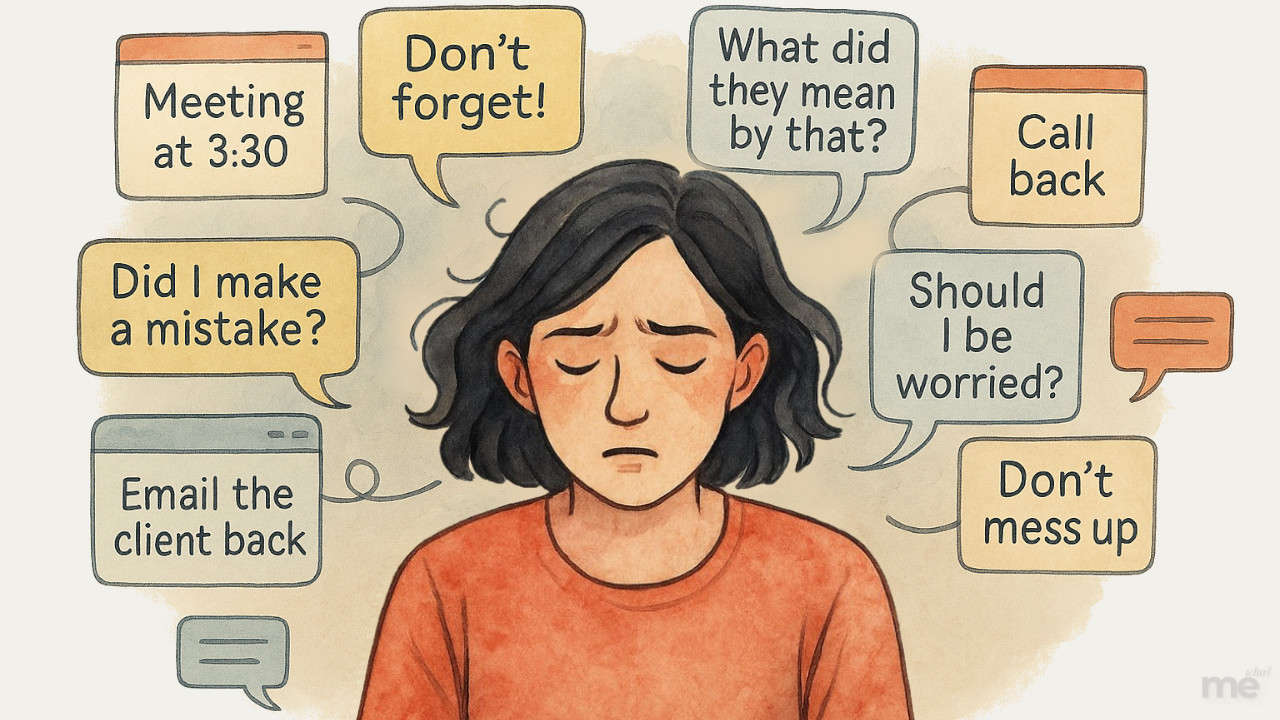
Do you have constant anxiety at work? Do you find yourself stuck in a cycle of worry about how others perceive you? Does anxiety before work (or anxiety about work performance) sap your energy and leave you dreading the day? Do you get the feeling that if something doesn’t change, you might burn out or feel like you’re falling behind?
If this sounds familiar, you’re not alone. Many professionals feel this same sense of tension throughout their workday. The most frustrating part? Even people who are succeeding and meeting their goals often carry deep stress about their performance. And if left unchecked, that anxiety can lead to exhaustion or complete burnout.
The good news: you don’t have to stay stuck. You don’t need anxiety to succeed at work. In this article, we’ll break down five grounded ways to calm anxiety without burning out.
Understanding Performance Anxiety at Work
Anxiety is a normal human emotion. It’s the brain’s way of warning us about potential challenges ahead. Some anxiety is helpful and can heighten your focus, remind you of what matters, and push you to prepare. It’s also part of what helps you experience excitement and motivation.

But when anxiety fixates on perceived threats—like critical feedback or judgment from coworkers—it can become disruptive.
Performance anxiety at work can take many forms:
- Anticipating a difficult performance review
- Worrying about an important career milestone
- Unease about your skills or qualifications
- Fear about social pressures at work
- Perfectionism and procrastination around key tasks
It’s important to recognize that performance anxiety often strikes not when you’re in danger of failing, but when something really matters to you. That’s not a weakness. It’s an emotional signal that you care.

The great news is, when you channel anxiety into thoughtful action, it often quiets itself.
Why Performance Anxiety Doesn’t Mean You’re Failing
If you’re feeling performance anxiety right now, take a deep breath. It doesn’t mean you’re broken, unqualified, or too sensitive for your role.
In fact, it likely means the opposite: that you care deeply, and want to show up well. It means that you value your work and take your responsibilities seriously.
It might be helpful to reframe the anxious thoughts into positive affirmations of what matters to you:
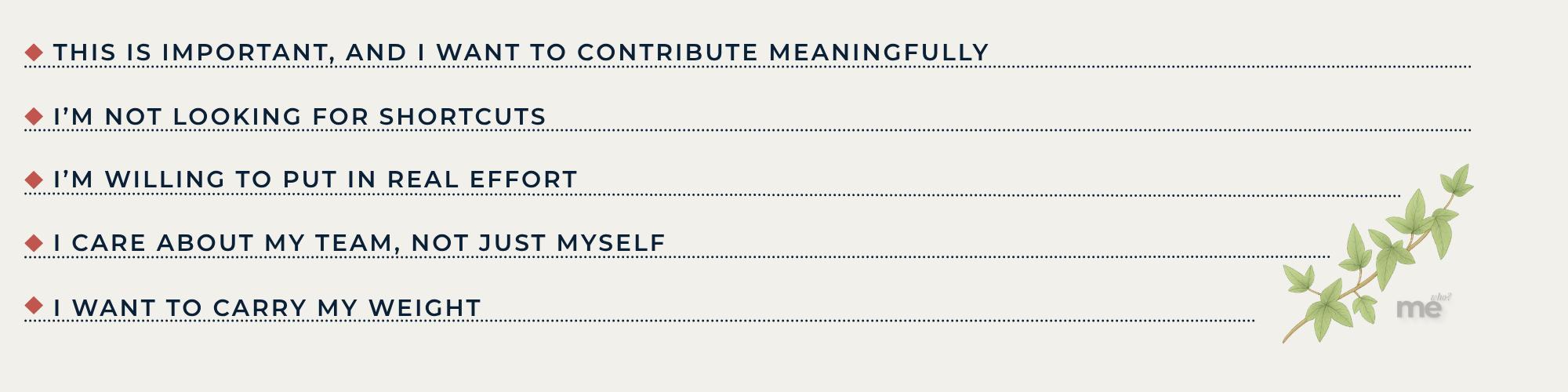
Performance anxiety doesn’t mean you’re failing, but it can wear you down if you don’t have a way to work through it or know how to deal with anxiety at work in a sustainable way. Let’s walk through five grounded steps to help you find that process.
5 Grounded Ways to Calm Performance Anxiety at Work Without Burning Out
This five-step approach is designed to guide you from a spiral of anxiety back to clarity and calm. Try to complete each step before moving to the next. Trying to rush the process can actually increase your stress.
1. Immediately Take 3 Deep Breaths
The hardest part of anxiety is often the start—the moment you realize it’s happening. Your thoughts start to race, and your body begins to tense.
When you notice that shift, pause and take three slow, intentional breaths. It might feel silly or ineffective at first, but it’s powerful.
In stressful moments, we tend to hold our breath, depriving our brain of oxygen just when it needs it most. Consciously breathing slows your physiological panic response and gives your mind something to work with.

2. Write Down What You Are Feeling
Once you’ve grounded yourself by breathing, open your notes app or grab a pen and jot down what you’re feeling.
Even if you never read it again, this moment of naming what you’re feeling helps quiet your nervous system. It tells your brain: I’ve acknowledged the alert—your message was received.
Here are some examples of feelings you may encounter during a typical workday:
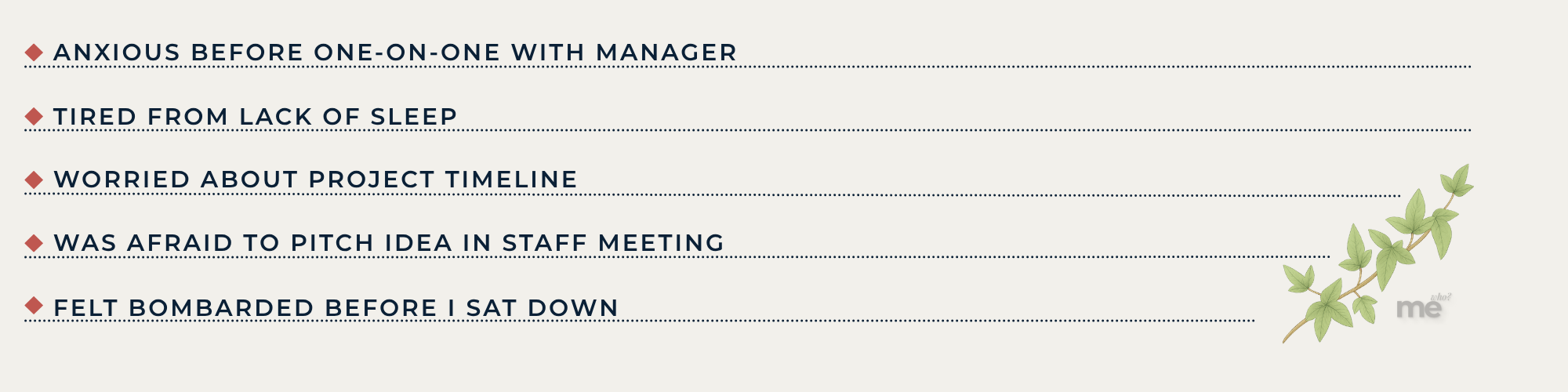
Even a brief note about what triggered the feeling can help. Over time, this helps you identify patterns and situations that spike your anxiety, and what might help you prepare for them next time.
3. Remove Yourself and Reflect
If possible, step away from the situation before taking action. Strong emotions—like anger, jealousy, or hopelessness—can push us to act in ways we later regret. Don’t suppress the feeling, but don’t obey it blindly either.
If you’re in a meeting or work session, carve out the next moment you can: a bathroom break, a walk, even just five minutes alone. Let that space be your reset point. Give yourself a moment to hear your emotions and understand what they’re trying to tell you—before they take the wheel.
4. Accept Difficult Feelings
This step is deceptively hard. The more you try to build a solution for anxiety, the more you reinforce the idea that it’s a problem to be eliminated, which deepens the cycle. It’s like when someone tells you to think about anything except a white elephant. Your brain immediately latches onto it, and it becomes hard to avoid. The more you resist an emotion, the more you entangle yourself in it. You can’t “solve” anxiety by trying to make it go away; instead, the key is letting it be there—without judgment or pressure to fix it.
Practice letting the feelings be there. The racing thoughts, the tight chest, the doubt—it’s all okay. Let yourself sit with it, without fixing it.
This kind of non-resistance often reveals the core message underneath. The feeling will soften once it’s truly heard. Emotions, like people, tend to quiet down when they feel seen.

5. Find the Signal in the Noise
When the wave of anxiety passes, give yourself a moment to reflect: What did I learn? Was there a trigger I didn’t expect? A need I didn’t express? A boundary that felt crossed?
You don’t need to draw grand conclusions, but each wave of anxiety offers a small insight if you pause long enough to catch it.
The next time you’re in that situation, you’ll have a little more awareness, and a little less fear. You’re actively training your system to associate that trigger with calm instead of panic. Each time you do this, you’re not just managing anxiety as a condition—you’re rewiring your response to the feedback entirely. Over time, calm becomes the new conditioned reflex. That’s how lasting confidence is built: one moment of steady self-assurance at a time.
When to Seek Deeper Support
These tools can be powerful, but depending on your history, support system, and emotional load, they may not always feel like enough. That doesn’t mean you’re doing it wrong.
If performance anxiety feels constant, paralyzing, or isolating, reaching out to a therapist may be one of the kindest things you can do for yourself. Therapists help you practice feeling better, with less pressure and more guidance. The terrain of working through inner experiences can be a lot for some, and a therapist can help you triangulate on your own experience from an outside vantage point.
Even if you’re using these strategies well on your own, you don’t have to do it all alone. Support makes the journey lighter.
Whether you choose self-guided healing or professional support, stay connected to yourself. Tools like breathwork, journaling, and check-ins throughout the day help you catch stress before it spirals. Burnout happens when we ignore the warning signs—not when we learn from them.

Conclusion
Performance anxiety at work is not proof you’re failing. It’s a sign that you care. That doesn’t mean it has to rule your work life. These five grounded strategies help you process anxious energy rather than fight it, and turn stress into steady progress.
Still Feeling On Edge?
If anxiety has you questioning your worth, it might be more than performance pressure. Our guide on Imposter Syndrome at Work helps you understand the deeper story behind self-doubt and how you can rewire it.
clzgq8
7wz043
1wtwhp